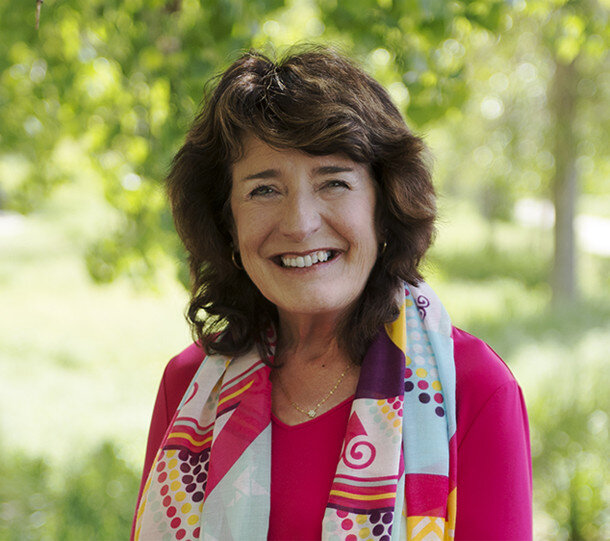
Lori Swanson Building Dynamic Relationships
Hello,
As requested by a few members, the power point slides from today’s presentation on Building a Dynamic Relationship with HR Professionals by Lori Swanson are attached. Thank you for attending today’s meeting, if you were able to. We hope to see you at the next meeting on June 14th, where the presentation will be Developing a Mediation Program for your EAP or Private Practice by Jon Richard.
-The Colorado Chapter of EAPA
Colorado Prevention Specialist Certification
Hello Colleagues,
Attached is a flyer regarding upcoming media events that will highlight the new Colorado Certified Prevention Specialist Certification. Officials from the Office of Behavioral Health will be informing participants about this credential and will explain how it can open up new professional opportunities for prevention specialists, help Colorado organizations be more competitive for funding and grants, and improve the quality of prevention work in our state. Please share this flyer with anyone who may be interested, and be sure to put it on your calendar. Feel free to contact me with any questions.
Thank you,
Laurie
Laurie Lovedale, MPH, Prescription Drug Abuse Prevention Program Coordinator
Peer Assistance Services, Inc.
2170 S. Parker Road, Suite 229 l Denver, CO 80231
303.369.0039 ext 203 l fax 303.369.0982
www.PeerAssistanceServices.orgMain-Flyer.pdf For Website Prevention Specialist
Job Posting for Halliburton
Halliburton.jobs
Job Title: Employee Assistance Program Rep
Requisition: 00235650
Why Halliburton? How about global opportunities, interesting work within small cohesive teams, extensive training, and the
opportunity to take your career wherever you want it to GO, with all the support and stability of a truly global organization.
With more than 60,000 employees in approximately 80 countries, Halliburton is one of the largest and most respected energy
services companies in the industry. Since 1919, our customers have relied on our industry-leading technologies, scientific
expertise and, most importantly, our knowledgeable and experienced professionals to help them meet the world’s demand for
energy. Whether you are a new graduate seeking your first job, or an experienced professional looking to make a career
change, we have fantastic opportunities across our organization. Are you ready to GO?
Under general supervision, applies knowledge of behavioral health to perform employee assistance core services on behalf
of Halliburton management, employees, and their families. Maintains timely and accurate information in the Employee
Assistance Program (EAP) database. Provides Critical Incident Stress Management (CISM) services for the company. Skills
are typically acquired through completion of a graduate degree in behavioral science and 2-4 years of related experience; or
equivalent combination thereof. Possession of the certification as a Certified Employee Assistance Professional (CEAP), a
mental health related licensure in the state of Colorado, as well as CISM certification training will be required. This position
will require about 20% travel.
Halliburton is proud to be an equal opportunity employer.
Location
(0067) Brighton
2990 Weld County Rd 27
Brighton, CO 80601
Job Details
Miscellaneous Information
Contract Type: Regular
Working Time: Full-time
Internal Job Title: A077-ESG-Employee Asst Prog Represent.:
Start Date: 03/21/2013
Contact Persons
Michelle Spearing Hiring Manager
Miranda Richard Recruiter – Primary
Kara Garcia Requisition Coordinator
Technical Reference:
Two Day Workshop For Reflective Leaders from ARC
From Colorado EAPA Member Reidar Hansen LCSW…If you have any questions you can contact him at: resiliencyinworkplace@comcast.net
Logistics & Cost
Tuesday and Wednesday, May 14-15, 2013 in Seattle Washington
8:30 AM to 4:30 PM each day.
There will be 1-2 hours of homework on the evening of the 14th.
Please make sure you can stay for the full workshop experience on both
days since exercises are interactive and depend on everyone being present
until closing on both days.
Lunch and break refreshments will be provided each day and are included in
the workshop cost.
If you are coming from out of town, please handle your own travel and hotel
arrangements. If you would like to reserve a room on-site, you will need to
contact Talaris separately. Please see the Location page for contact
information.
Limit: Ten participants. Reservations will be accepted until the workshop
fills or April 21st, which ever comes first. No refunds may be given after
that date. In the event you must withdraw prior to April 21st, your fee will
be refunded in full.
$500 Workshop Fee. Payment is due at the
Employee Assistance Certification Commission Seeks Applicants to succeed Current Term Limited Commissioners
The Employee Assistance Certification Commission (EACC) is seeking applicants to succeed the Commissioners whose three-year terms are ending following the EACC meeting at the EAPA Annual World EAP Conference in October 2013. Applicants holding a current CEAP and welcoming the opportunity to make a contribution to the EA profession are invited to apply to serve on the Commission for a three-year term. For more information, visit http://www.eapassn.org/files/public/eaccCall2013.pdf. To complete the online application go to http://www.eapassn.org/i4a/forms/index.cfm?id=75. Application deadline is June 3rd, 2013.
Questions? Contact Shirley Springfloat, Director, Credentialing
703-387-1000 Ext. 311 s.springfloat@eapassn.org
Another good article from Medscape on critical Incident/Resiliency based interventions.
chool Shootings and Lessons Learned
Kate Johnson
Dec 31, 2012
In the aftermath of the Sandy Hook Elementary School shootings in Newtown, Connecticut, that took the lives of 20 very young children and 6 adults, the experience of mental health professionals who have been at the center of similar tragedies offers up some valuable lessons.
|
Memorial at Dawson College. (2006/Dawson College) |
Montreal is a city that has experienced 3 school shootings that included 15 dead at the École Polytechnique in 1989, 4 dead at Concordia University in 1992, and most recently, Dawson College.
Psychiatrist Warren Steiner, MD, was the McGill University Health Center’s psychiatrist-in-chief when 25-year-old Kimveer Gill stormed the atrium of Dawson College on September 13, 2006, killing 18-year-old student Anastasia De Sousa and wounding 19 others before killing himself.
That moment launched a “psychological first aid” response that was very different from the city’s responses to previous school shootings.
With hindsight, Dr. Warren said he would do some things differently — and some the same — lessons that he hopes might help others who are dealing with similar situations.
“The consequences do continue for years afterwards, and they were not the consequences that we expected,” he said. “It went far beyond PTSD [posttraumatic stress disorder].
In fact, research carried out by the team 18 months after the Dawson College shooting shows that substance abuse and major depressive disorder emerged as bigger players than PTSD.
“One thing we would have done very differently is talk about all sorts of psychological reactions, not just PTSD,” he said.
Trauma Surge
When the first shots were fired at Dawson College, Dr. Steiner was across the street having lunch with his son. He returned to a Code Orange (community emergency) at the Montreal General Hospital, in which mental health services had all but been forgotten.
“It was just chaos. I went into the control room and they had no idea why I was there. We hadn’t been thought of,” he recalls.
“It was clear after 9/11 that the psychological consequences of these kinds of major disasters outnumber the physical consequences about 10 to 1…yet they had no idea why I was there.”
But before long it was clear.
“Some of the shooting victims were coming for surgery, but then there was a flood — it’s called a surge — of nonphysical trauma. We had hundreds of kids, parents, and staff. They were feeling completely overwhelmed. They were hysterical, sobbing, terrified, and having panic attacks,” Dr. Steiner told Medscape Medical News.
“One fellow had been holding Anastasia [the victim who died] and talking to the shooter. Other people were covered in blood. These were horrible things these young people experienced.”
From that moment, a massive psychological first-aid effort was launched, aimed at damage control.
No Guidance
“We decided to be proactive,” he explained at a recent meeting of the Canadian Psychiatric Association. “We sought out people and tried to actively identify those at risk for late-onset distress.”
But there was little to guide the team’s proactive instinct.
It is not known whether specific interventions can reduce the risk for PTSD, and previous tragedies have yielded little research.
Within hours, a call made to Columbine High School generated little advice about how to proceed proactively, and there was even some lingering uncertainty about the potential of re-traumatizing victims.
“It was at that point we realized we were on our own and had to develop a plan very, very quickly on the fly,” said Dr. Steiner.
From there, a marathon began.
For the first week, Dr. Steiner and his team were on the scene of the shooting 24/7. At one point they numbered more than 100 mental health workers.
When the school reopened, floaters scanned the crowd for traumatized individuals, approaching them and offering psychological support.
They launched a focused outreach aimed at psycho-education.
Articles were commissioned in the school newspaper, and handouts were distributed about the risks and signs of PTSD.
For more than 6 months, a block of 12 therapy rooms at the college remained constantly staffed, attending to a steady stream of traumatized students and teachers.
The message to everyone was “be very careful not to pathologize the normal healing process,” said Dr. Steiner.
“You could be waking up at night with terrible nightmares and reliving it, or jumping at the sound of someone dropping their books — these are normal reactions; you are not ill because you’re experiencing them.”
Psychological First Aid
“Psychological first aid” has become “the intervention of choice” in the immediate aftermath of a tragedy, agrees psychologist Christopher Flynn, PhD, director of the Cook Counseling Center at Virginia Polytechnic Institute and State University in Blacksburg.
But the nature of that aid is still a subject of debate.
Within 15 minutes of the first shots in the 2007 Virginia Tech massacre — which eventually left 32 dead — Dr. Flynn too was mobilizing psychological first aid for survivors and the families of victims.
“They used to talk about critical incident stress debriefing, in which people would get together and talk about their immediate reactions to trauma, and that was thought not be particularly effective and in some cases actually did harm,” he told Medscape Medical News.
“Psychological first aid suggests that the sooner we can bring resources to bear, the more likely it is that immediate stress disorders can be handled with decreasing likelihood of posttraumatic stress.”
Indeed, the study carried out after the Dawson College shootings suggests this theory may hold true when it comes to PTSD. But the research also points to the risk for other outcomes, Dr. Steiner warned.
As expected, the study, which included a sample of 949 Dawson college students and staff, showed a 3-fold spike in the prevalence of any form of mental disorder after the shooting as compared with rates reported in the Canadian Community Health Survey (30.9% vs 10.9%), which was carried out the previous year.
In addition, PTSD prevalence was higher than in a Canadian military peacekeeping cohort (3.4% vs 1.4%).
Unexpected Finding
But the unexpected finding was that the increase in PTSD was stunted compared with the increases in both alcohol and illicit drug abuse (8.7% vs 2.6% and 2.6% vs 0.8%, respectively) and major depressive disorder (12.1% vs 4.8%).
“So the rate of PTSD was not as high as we expected. Is that because we focused on that? Would it have been even higher if we hadn’t focused on it?
“People react in different ways…. They may be very jumpy or very anxious all the time, and their reaction may be to turn to drugs or alcohol to self-medicate. So one thing I would do differently is I would say, ‘you are at higher risk for the development of mental health problems in general — not just PTSD,’ ” said Dr. Steiner.
But a similar study carried out by Virginia Tech, in collaboration with Harvard University, during the 4 months after that campus massacre shows a much higher rate of “probable PTSD” (15.4%), based on a cross-sectional survey of 4639 students.
The reasons for this apparent difference are not clear. Compared with the Dawson study, the Virginia Tech study was carried out much sooner after the tragedy and included a larger number of participants.
Despite intense counseling over prolonged periods at both schools, the nature of mental health interventions may have differed, and the time point in the school year (September at Dawson and April at Virginia Tech) may have affected the dissemination of psychological first aid.
In addition, the scope and duration of the shooting at Virginia Tech extended beyond that of the Dawson College incident.
Mental Health Prognosis
One thing both studies suggest is that the proximity of a person to a shooter or a victim can, to some extent, predict their future mental health risk.
In the case of Dawson, 13% of respondents saw the shooter, 35.8% saw someone wounded or killed, and 3.3% tried to help a wounded or dead victim.
Down the road, these were the people most at risk for psychological trauma, said Dr. Steiner, adding that in addition to degree of exposure, the study showed that female sex carried a higher risk for PTSD (odds ratio [OR], 3.54) and major depressive disorder (OR, 3.93).
At Virginia Tech, during several hours of uncertainty over the shooter’s whereabouts, 64.5% of survey respondents were unable to confirm the safety of their friends, and 9.1% had a close friend who was killed.
In that study, the ORs for high levels of posttraumatic stress symptoms were highest for those who experienced the injury or death of someone close (2.6 – 3.6) and those who were unable to confirm the safety of friends (2.5).
Perhaps knowledge of these statistics may one day guide mental health professionals in counseling trauma victims about their future mental health, Dr. Steiner suggests.
“I would now say, if someone was in the atrium at the time of the shooting, it is imperative that they meet with a mental health professional to be evaluated, because they’re going to be at the highest risk down the road.”
Toward Healing
The long-term effect of the tragedy on the students of Sandy Hook Elementary School remains to be seen, and efforts are underway to help them recover some sense of normalcy.
When their classes resume in a new building, the pain and fear will still be fresh, but the act of returning will be an important step toward healing.
That was the case for the thousands of Dawson College students who on September 18, 2006, made a symbolic reentry into their college atrium — which just days before had been filled with bloodstained books and backpacks.
“It takes a lot of courage to come back 5 days later,” Dr. Steiner acknowledged. He had fought for the resumption of classes as soon as possible, against some resistance.
“Quite a few teachers said we should just cancel the semester. But that builds up, and your negative expectations grow and grow. So we met all the teachers on the Friday in the gym and persuaded them. And they were on board after that,” he said.
The following Monday, when the students returned, the teachers met them inside, and the atrium was filled with applause. Today, a peace garden stands as a memorial to the tragedy.
Provided By EAPA Chapter member:
Reidar Hansen, LCSW
7400 W. Grant Ranch Blvd.
#46
Littleton, Co. 80123
720-254-5219
Hope Illuminated: A Comprehensive Approach to Suicide Prevention–Sally Spensor-Thomas Psy.D.
In light of the numerous headlines reporting on suicide this year, communities are learning more about what can
be done to prevent such tragedy. Suicide is a leading cause of death in the U.S., and a proactive public health
approach is needed to prevent this type of tragedy. In this presentation, participants will learn about how the
suicide continuum impacts communities, and how some groups may be more vulnerable than others. Identified
best practices within a public health approach will be explored and audience members will have an opportunity to
create a blueprint for change. This highly interactive and engaging presentation will assist participants in the
readiness for suicide crisis response and how to respond should a suicide tragedy strike.
Link To Flyer:
2013 half day training EAPA Conference – Spencer-Thomas Suicide Prevention